Geothermal Energy is an exciting avenue in the renewable energy landscape, showcasing how we can harness the Earth’s natural heat for sustainable power. With its roots deeply embedded in the Earth’s core, geothermal energy offers a unique alternative to traditional energy sources, making it a major player in our fight against climate change.
This energy source not only provides a steady and reliable power supply but also contributes to reducing greenhouse gas emissions. From heating to electricity generation, geothermal energy systems come in various forms, each with its own advantages, making it crucial for both residential and industrial applications.
Introduction to Geothermal Energy
Geothermal energy is a renewable energy source derived from the natural heat of the Earth. This heat emanates from the Earth’s core and is produced by the decay of radioactive materials, as well as from the primordial heat left over from the planet’s formation. Geothermal energy can be harnessed in various forms, including steam for electricity generation, hot water for heating, and even direct use applications in agriculture and aquaculture.The significance of geothermal energy in the renewable energy sector cannot be overstated.
As a clean and sustainable energy source, it contributes to reducing greenhouse gas emissions and dependence on fossil fuels. Geothermal energy provides a stable and reliable energy supply, operating at a high capacity factor compared to other renewable sources like wind and solar. This consistency makes it a valuable asset in diversifying energy portfolios and enhancing energy security.
How Geothermal Energy Works
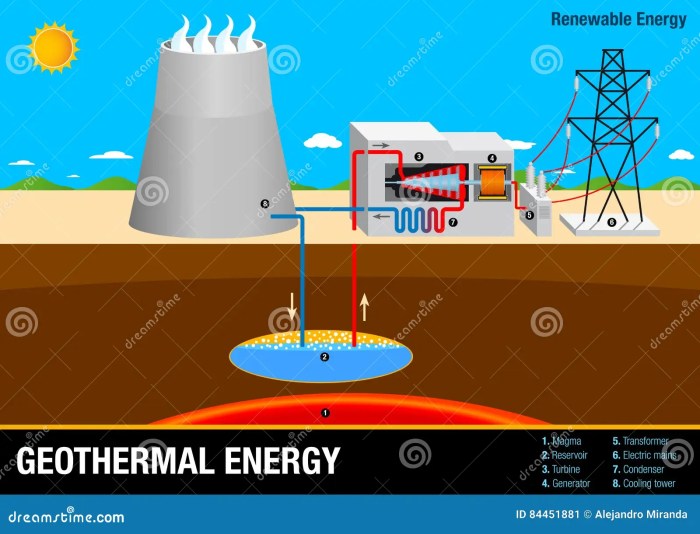
Geothermal energy operates based on fundamental principles involving heat exchange between the Earth’s interior and the surface. The process begins with the extraction of heat from underground reservoirs containing hot water or steam. These reservoirs can be accessed through wells drilled into the Earth, allowing for the capture of thermal energy. There are three primary methods for harnessing geothermal energy:
- Geothermal Power Plants: These plants convert geothermal steam or hot water into electricity. Steam produced from underground reservoirs drives turbines connected to generators, producing electricity. The most common types of geothermal power plants include dry steam, flash steam, and binary cycle plants.
In addition to power generation, geothermal energy can also be utilized for direct heating applications:
- Direct Use Applications: This involves using hot water directly from geothermal sources for heating buildings, greenhouses, or even fish farms. This method is highly efficient and reduces the need for additional heating systems.
- Geothermal Heat Pumps: These systems utilize the relatively stable underground temperatures to heat and cool buildings. Pipes buried in the ground circulate a fluid that absorbs heat in the winter and dissipates heat in the summer, providing an efficient temperature regulation solution.
A key concept in understanding geothermal energy is the geothermal gradient, which is the rate of temperature increase with depth in the Earth. This gradient typically averages about 25-30 degrees Celsius per kilometer of depth. This means that as you go deeper into the Earth, the temperature continues to rise, providing a consistent heat source for geothermal systems.
“Geothermal energy is a powerful and underutilized resource that can significantly contribute to a sustainable energy future.”
Types of Geothermal Energy

Geothermal energy systems are categorized based on the temperature of the geothermal resource they utilize. Understanding these types is essential for selecting the appropriate application for residential or industrial use. Each type of geothermal energy system comes with its own set of characteristics, advantages, and limitations.
Low-Temperature Systems
Low-temperature geothermal systems generally operate at temperatures below 90°C (194°F). These systems are often used for direct heating applications, such as residential heating and greenhouse heating. A common example includes ground-source heat pumps, which can efficiently heat and cool buildings by exchanging heat with the ground.
- Applications: These systems can be utilized in residential settings for space heating, hot water, and even in swimming pools. In industrial settings, they can provide heating for greenhouses, aquaculture, or food processing.
- Advantages: Low upfront costs and relatively simple systems. They also have lower environmental impacts compared to fossil fuels.
- Disadvantages: Limited to heating applications and may require significant land area for installation.
Medium-Temperature Systems
Medium-temperature geothermal systems operate between 90°C and 150°C (194°F to 302°F). These systems can be used for both heating and power generation. They are suitable for applications such as district heating and industrial processes that require steam.
- Applications: Medium-temperature geothermal energy can be used in district heating systems, where multiple buildings share a centralized heating source. It can also be used for drying agricultural products and in various industrial processes.
- Advantages: Versatile applications, including both heating and electricity generation. They can provide a stable energy supply with minimal emissions.
- Disadvantages: Higher initial costs compared to low-temperature systems, and the need for more advanced technology can increase complexity.
High-Temperature Systems
High-temperature geothermal systems generally function at temperatures above 150°C (302°F) and are primarily used for electricity generation. These systems are typically found in geothermal power plants that convert geothermal energy into electricity.
- Applications: High-temperature systems are crucial for large-scale power generation in geothermal plants, such as the Geysers in California, which is one of the largest geothermal power complexes in the world.
- Advantages: High energy output and efficiency in generating large quantities of electricity. They also provide a renewable energy source with a low carbon footprint.
- Disadvantages: High development and operational costs, along with the potential for induced seismicity and land subsidence in certain areas.
Geothermal Energy Technology
Geothermal energy technology harnesses the natural heat from the Earth, providing a sustainable and reliable source of power. It involves advanced methods to convert geothermal resources into electricity, making it a pivotal player in the renewable energy landscape. Understanding the technology behind geothermal power plants is essential for appreciating their role in meeting energy needs while minimizing environmental impact.The conversion of geothermal energy to electricity typically involves several key processes, primarily conducted within geothermal power plants.
These plants utilize steam or hot water from the Earth’s interior to drive turbines, which generate electricity. The main types of geothermal power plants are dry steam, flash steam, and binary cycle plants, each serving different geothermal resource conditions.
Geothermal Power Plant Types and Processes
There are three primary types of geothermal power plants, each utilizing distinct processes to convert geothermal energy into electricity:
- Dry Steam Plants: These plants use steam directly from geothermal reservoirs to turn turbines. The steam is extracted from underground, often at temperatures above 150°C, and sent directly to the turbine. An example of a dry steam plant is the Geysers in California, which has been in operation since the 1960s. The process is straightforward and highly efficient, as it utilizes the steam without the need for water separation.
- Flash Steam Plants: In flash steam plants, high-pressure hot water from the geothermal reservoir is brought to the surface and allowed to expand or “flash” into steam, which then drives the turbine. Typically, these plants operate with water temperatures ranging from 180°C to 300°C. The Larderello plant in Italy is one of the oldest flash steam power plants, showcasing the effectiveness of this technology since the early 1900s.
- Binary Cycle Power Plants: This type uses a secondary fluid that has a lower boiling point than water. Geothermal water heats this fluid through a heat exchanger, causing it to vaporize and turn turbines. Binary plants can utilize lower temperature resources (below 150°C), making them versatile in areas with less intense geothermal potential. An example is the Chena Hot Springs Resort in Alaska, which demonstrates how these plants can be deployed in a variety of settings.
Understanding these technologies highlights the efficiency and adaptability of geothermal energy. Each type of plant has its advantages, making geothermal energy suitable for various geographical and geological conditions.
Geothermal Energy vs. Other Renewable Energy Technologies
When comparing geothermal energy with other renewable energy sources, several factors come into play, including reliability, efficiency, and land use. Here’s a brief overview:
- Reliability: Geothermal energy provides a stable and consistent power output, often operating at over 90% capacity, unlike solar or wind energy, which are intermittent sources. For example, a geothermal plant can provide baseload power 24/7, ensuring a steady supply regardless of external conditions.
- Efficiency: Geothermal power plants have a higher energy conversion efficiency compared to many solar panels and wind turbines. The ability to extract energy directly from the Earth leads to lower conversion losses, making it a highly effective energy source.
- Land Use: Geothermal plants typically require less land than solar farms or wind farms for the same energy output. This efficiency in land use is crucial in areas where space is limited or where land preservation is a priority.
Geothermal energy stands out for its ability to provide consistent, renewable energy with a small ecological footprint, making it a vital component of a sustainable energy future.
Environmental Impact
Geothermal energy offers a range of environmental benefits, making it a compelling alternative to fossil fuels. By harnessing the Earth’s heat, we can significantly reduce greenhouse gas emissions and reliance on non-renewable energy sources. However, it’s essential to consider both the positive and negative effects of geothermal energy extraction on the environment.The utilization of geothermal energy can lead to a substantial decrease in air pollution.
Unlike fossil fuel-based power plants, geothermal facilities release minimal amounts of carbon dioxide and nitrogen oxides. Additionally, geothermal plants often consume less land than traditional power plants, reducing habitat disruption. However, it’s crucial to recognize the potential negative impacts that can arise from geothermal energy development, such as land subsidence, water contamination, and induced seismicity.
Environmental Benefits of Geothermal Energy
The positive aspects of geothermal energy include a variety of environmental benefits that contribute to sustainable energy solutions. Here are some key points highlighting these benefits:
- Reduction in greenhouse gas emissions, leading to a cleaner atmosphere.
- Lower air pollutants compared to fossil fuel combustion.
- Minimal land footprint, preserving natural habitats.
- Stability of energy prices due to reduced reliance on volatile fossil fuel markets.
- Ability to provide baseload power, ensuring consistent energy supply.
Negative Environmental Impacts of Geothermal Energy
Despite its benefits, geothermal energy extraction can pose challenges to the environment. Recognizing these issues is vital for responsible development. The potential negative impacts include:
- Land subsidence – The ground may sink due to the extraction of geothermal fluids.
- Water contamination – Chemicals used in the geothermal process can potentially leak into groundwater.
- Induced seismicity – The injection of water into geothermal reservoirs can trigger small earthquakes.
- Noise pollution – The operation of geothermal plants can produce significant noise that impacts local communities.
Mitigation Measures for Environmental Effects
To address the environmental challenges associated with geothermal energy, various measures can be implemented. Here’s a table outlining practical strategies that can be adopted to reduce negative impacts during the extraction process:
| Impact | Mitigation Measure |
|---|---|
| Land Subsidence | Implement a controlled extraction strategy and monitor ground stability regularly. |
| Water Contamination | Use closed-loop systems to prevent fluid leaks and regularly test nearby water sources for contamination. |
| Induced Seismicity | Conduct thorough geological assessments and employ careful injection practices to minimize seismic activity. |
| Noise Pollution | Utilize sound-dampening technology and maintain equipment to reduce operational noise levels. |
By understanding both the benefits and impacts, we can harness geothermal energy responsibly and sustainably.
Economic Aspects
The economic viability of geothermal energy projects is pivotal in determining their success and sustainability. Understanding the associated costs, potential funding sources, and financial incentives can significantly influence investment decisions and project planning. With a growing global interest in renewable energy, geothermal stands out due to its relatively stable costs and environmental benefits.The development of geothermal energy projects entails several costs, which can be categorized into upfront capital expenditures, operational expenditures, and maintenance costs.
Capital costs include drilling wells, building power plants, and the infrastructure necessary for energy distribution. Operational costs typically cover labor, maintenance, and resource management. Although initial investments can be high, the long-term benefits often outweigh these costs, particularly in areas with abundant geothermal resources.
Funding Opportunities and Financial Incentives
Various funding opportunities and financial incentives are available to support geothermal energy initiatives. Governments, international organizations, and private investors actively promote geothermal development through grants, loans, and tax credits. These financial mechanisms aim to ease the burden of initial investments and encourage the transition to renewable energy sources.Key funding opportunities include:
- Government grants and subsidies designed to offset development costs.
- Low-interest loans from development banks focusing on renewable energy projects.
- Investment tax credits available in many countries, allowing investors to deduct a percentage of the investment cost from their taxes.
- Partnerships with private firms specializing in renewable energy financing.
Countries Leading in Geothermal Energy Investment and Development
Several countries have emerged as leaders in geothermal energy investment and development, showcasing significant advancements in technology and infrastructure. Their commitment to harnessing geothermal resources reflects both economic and environmental goals. The following countries are notable for their investments in this sector:
- Iceland – Known for utilizing nearly 90% of its heating from geothermal sources.
- United States – Home to the largest number of geothermal power plants, particularly in California.
- Philippines – The second-largest producer of geothermal energy for electricity globally.
- New Zealand – Actively investing in geothermal technology, providing a significant portion of its energy from geothermal sources.
- Indonesia – Rapidly expanding its geothermal capacity, focusing on making it a major energy source.
Global Geothermal Energy Usage
Geothermal energy is gaining traction worldwide as a sustainable and eco-friendly energy source. With a growing emphasis on reducing carbon emissions and transitioning to renewable energy, geothermal energy presents a viable alternative that harnesses the Earth’s natural heat. Currently, geothermal energy is being utilized in various capacities, from electricity generation to direct heating applications across multiple regions.As of recent data, the global installed capacity of geothermal power plants reached approximately 15 gigawatts (GW).
This capacity is predominantly concentrated in regions with significant geothermal resources, such as the United States, Indonesia, and the Philippines. The global geothermal energy production has seen a steady increase, attributed to advancements in technology and a greater commitment to renewable energy investments by various governments.
Current Global Usage and Production
Geothermal energy production varies significantly across different parts of the world, with certain countries leading in both usage and capacity. The following highlights the current status of geothermal energy production globally:
- United States: The U.S. is the largest producer of geothermal electricity, with an installed capacity of around 3.7 GW. California remains the leading state, hosting the Geysers, the world’s largest geothermal complex.
- Indonesia: With about 2.1 GW of installed capacity, Indonesia ranks second globally. The country has a vast geothermal potential, estimated at 28 GW, primarily concentrated in volcanic regions.
- Philippines: The Philippines has an installed geothermal capacity of around 1.9 GW, making it the third-largest producer. The country relies heavily on geothermal energy for its electricity needs, contributing to over 20% of the national energy mix.
- Italy: Known for the first commercial geothermal plant established in 1911, Italy has around 0.9 GW of geothermal capacity, mainly used for electricity generation and district heating.
Case Studies of Successful Geothermal Projects
Examining successful geothermal projects provides insights into effective implementation and management strategies in different regions. Here are notable examples:
- Hellisheiði Power Station, Iceland: This geothermal power plant, one of the largest in the world, has an installed capacity of 303 MW. It not only generates electricity but also supplies hot water for district heating, showcasing the dual-use potential of geothermal resources.
- Green Mountain Power, Vermont, USA: This project utilizes geothermal heat pumps to provide heating and cooling solutions for residential and commercial buildings. It has been instrumental in promoting energy efficiency and reducing reliance on fossil fuels in the region.
- Wairakei Power Station, New Zealand: Established in 1958, it was one of the first major geothermal power stations globally. With a capacity of 140 MW, it set the standard for geothermal energy development and sustainability practices.
Comparative Geothermal Energy Usage Rates
Geothermal energy usage rates can vary significantly by region, reflecting local resource availability, technology adoption, and government policies.
| Region | Installed Capacity (GW) | Percentage of Energy Mix |
|---|---|---|
| United States | 3.7 | 0.4% |
| Indonesia | 2.1 | 5.5% |
| Philippines | 1.9 | 20% |
| Italy | 0.9 | 1.0% |
| New Zealand | 1.0 | 17% |
This table illustrates the varying levels of geothermal energy utilization across different regions. Countries with a higher percentage in their energy mix often invest more in geothermal technology and infrastructure, emphasizing its importance in their national energy strategies.
Future of Geothermal Energy
As we look to the future, geothermal energy stands poised to play a crucial role in the global transition to sustainable energy sources. The combination of emerging technologies and the growing recognition of geothermal energy’s benefits offers exciting possibilities for its expansion. With climate change being a pressing concern, geothermal energy presents a low-emission alternative that can help in mitigating environmental impacts while providing reliable power.
Emerging Trends and Technologies in Geothermal Energy
The geothermal energy sector is witnessing several transformative trends and innovative technologies that are enhancing its viability and accessibility. Key developments include:
- Enhanced Geothermal Systems (EGS): This technology involves creating artificial reservoirs by injecting water into hot rock formations, significantly expanding the areas where geothermal energy can be harvested.
- Binary Cycle Power Plants: These systems utilize a secondary fluid with a lower boiling point than water, making it possible to generate electricity from geothermal sources with lower temperatures, thus broadening the potential for geothermal energy.
- Geothermal Heat Pumps: Increasingly popular in residential and commercial buildings, these systems harness the stable temperatures below the Earth’s surface for heating and cooling, reducing reliance on fossil fuels.
- Smart Grid Integration: The integration of geothermal energy into smart grid systems enables more efficient energy distribution and management, enhancing the resilience of energy systems.
Potential for Geothermal Energy in Combating Climate Change
Geothermal energy plays a significant role in the fight against climate change by providing a stable, renewable energy source with a minimal carbon footprint. The low emissions associated with geothermal plants compared to fossil fuels contribute to improved air quality and lower greenhouse gas concentrations. For instance, a geothermal plant can reduce carbon dioxide emissions by up to 90% compared to a coal-fired power plant.
The continuous baseload power provided by geothermal sources also complements the intermittent nature of solar and wind energy, ensuring a steady supply.
Utilizing geothermal energy can lead to a substantial reduction in global carbon emissions, making it an essential component of climate action strategies.
Roadmap for Future Development of Geothermal Energy in Urban Areas
To maximize the potential of geothermal energy in urban settings, a strategic roadmap is essential. This roadmap should Artikel key actions and considerations for integrating geothermal systems into city infrastructures:
- Urban Geothermal Resource Mapping: Conduct comprehensive mapping of geothermal resources accessible within urban zones to identify suitable sites for the installation of geothermal systems.
- Policy and Regulatory Frameworks: Develop supportive policies that incentivize the adoption of geothermal technologies, including subsidies, tax benefits, and streamlined permitting processes.
- Public-Private Partnerships: Foster collaboration between government entities, private sector companies, and research institutions to facilitate funding and technology sharing for urban geothermal projects.
- Community Engagement: Educate and involve local communities in geothermal initiatives to enhance acceptance and understanding of geothermal energy’s benefits.
- Integration with Existing Infrastructure: Explore opportunities to retrofit existing heating systems with geothermal solutions, reducing the need for extensive new constructions.
Final Summary
In summary, geothermal energy stands out as a promising solution in the renewable energy sector, blending environmental benefits with practical applications. As we continue to innovate and explore its potential, geothermal energy could play a pivotal role in creating a sustainable future, helping us move towards a cleaner, greener planet.
FAQ Insights
What is geothermal energy?
Geothermal energy is the heat that comes from the Earth’s core, used for heating and electricity generation.
Is geothermal energy renewable?
Yes, geothermal energy is renewable as it relies on the Earth’s internal heat, which is constantly replenished.
What are the main uses of geothermal energy?
Geothermal energy is primarily used for electricity generation, direct heating applications, and district heating systems.
Are there any environmental concerns with geothermal energy?
While geothermal energy has many benefits, there are potential environmental impacts such as land use change and the release of greenhouse gases.
How does geothermal energy compare to other renewable sources?
Geothermal energy provides a consistent power supply, unlike solar and wind, which are intermittent, making it a reliable energy source.